Labour is falling into Johnson’s trap. If only it had backed May’s Brexit deal in January

154886067_df8f06da75I am writing this as Members of Parliament are gathered in Westminster, on the first Saturday since the Falklands conflict of 1982, for yet another “make or break” day of reckoning on Brexit. MPs have just voted narrowly to pass Oliver Letwin’s amendment, delaying a decision on Boris Johnson’s Brexit deal and compelling him to request an extension of Article 50.

I’m a Labour man who voted wholeheartedly for Remain in 2016, but unlike many of my relatives and friends I’m not on the People’s Vote march today. If I was a Labour MP I might even cross my fingers, pinch my nose, and vote for Boris Johnson’s Brexit deal.

Why? Media coverage of Brexit tends to assume that the British electorate fall into three categories: ardent Remainers, ardent Leavers, and “repentant Leavers” who are now persuaded that the UK should stay in the EU, or at least that there should be a second referendum. But there is also a sizeable fourth category, whose views are rarely aired: those who voted remain, often for purely pragmatic reasons, but who now think the least worst option is an orderly Brexit, with a deal. Living in the east Midlands I come across people like these quite frequently, but although polling is beginning to identify them their voices are seldom heard in the media.

It is in this fourth category that I now find myself. I have never had any sympathy with ‘Lexiteers’, with their hackneyed prejudices against the EU for being a neo-liberal ‘bosses club’. Membership of the EU has been unquestionably good for Britain, and I deplore the little-England xenophobia, and in some cases outright racism, of the right-wing Brexiteers. In an ideal world, I wish there hadn’t been a referendum on EU membership in the first place. There was, after all, no groundswell of public demand for one prior to 2016. David Cameron only called a referendum to appease UKIP and the Eurosceptic right of the Tory party. A stronger leader would have resisted their pressure. Continue reading
Posted in Uncategorized | Tagged , , , , , , | 1 Comment

Why the new London Bridge station doesn’t deserve to win the Stirling Prize

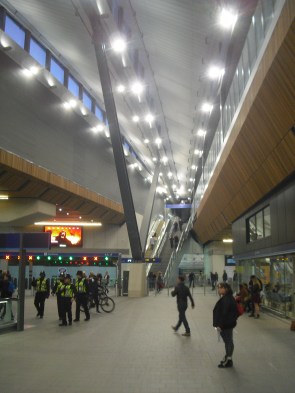
CIMG2554.JPGNews that the redeveloped London Bridge station has been shortlisted for the 2019 Stirling Prize will be treated with bemusement by many of its commuters. The reconstruction began in 2013 and was all but finished in 2017. It was officially re-opened by the Duke of Cambridge more than a year ago, in May 2018. As with most large infrastructure projects, Grimshaw’s new station has opened incrementally, but two-thirds of the new concourse, and several new platforms, opened to passengers in August 2016, nearly three years ago. It’s not clear why it has only been put forward for the Stirling now, some time after the last increment was opened.
Although the timing seems odd, the new station is easily the biggest project on this year’s Stirling shortlist (among the others are a house in Berkshire made of cork, a visitor centre at a Scottish whisky distillery, and 105 council homes in Norwich), and has a strong chance of being the final winner.

Anyone who regularly used the old London Bridge – as I did, for 20-odd years – will agree that the new station is a big improvement. The old station was a hellhole. The canopies of platforms 1 to 6, and the overbridge between them, had been rebuilt in the mid-1970s and perfectly symbolised the penny-pinching austerity of the time, clad in aluminium painted – for reasons unknown – in a shade of lavatorial brown. These platforms were too narrow, and only partly covered. There was no disabled access between these platforms, other than by going down and up long, and very overcrowded, ramps at their western end. The old Victorian trainshed over platforms 7 upwards had survived the 1970s revamp but was unloved, its glazing replaced by corrugated plastic, and cluttered with British Rail offices clad in opaque black glass.

Although London Bridge’s underground station had been rebuilt in the late 1990s, with the opening of the Jubilee Line extension, the only connection between platforms 1-6 and the tube station was via cramped, claustrophobic corridors whose ceilings often leaked: overflowing plastic buckets to catch rainwater were not an uncommon sight. Continue reading

Posted in Uncategorized | Tagged , , , , , , | 8 Comments

Northamptonshire may no longer be bankrupt. But splitting the county in two does nothing to solve its identity crisis

CIMG3572.JPG

Brexit, and the ongoing Conservative leadership contest, dominate. Other stories rarely get a hearing. The fact that despite her imminent resignation as Prime Minister, Theresa May remains ahead of Jeremy Corbyn in the personal approval ratings. The ongoing political crisis in Belgium, one of our closest European neighbours, which now has a minority government after a coalition fell apart due to an immigration row that makes Britain’s Brexit ructions seem like small beer. The long-awaited proposals for expanding Heathrow Airport, with the loss of 750 homes, which would in normal circumstances be headline news.

Compared to these stories, the implosion of local government in a middle England county over the last two years stands little chance of breaking through. Since Northamptonshire’s County Council finally balanced its books and had its emergency spending controls lifted in March, a year after being declared effectively bankrupt, many may assume the crisis is over. But it isn’t, and the story tells us much about the fallout of austerity, the sheer incompetence of many Conservatives in local government, and Labour’s collapse in middle England over the last 15 years. It deserves a lot more attention than it has received.

While the immediate crisis may have been averted, the council’s – and the county’s – underlying problems remain, and may have even been magnified. Many lessons have yet to be learnt to prevent a large county council from ever going bust again.

Continue reading
Posted in Uncategorized | Tagged , , , , , , , | 2 Comments

Critics who live in glass houses shouldn’t throw stones about anti-semitism. Chaos arrived at Labour HQ before Corbyn did

anti-semitismHolocaust denial at Labour party meetings. Jewish members being called “dirty Zionists”, or worse. Party staffers being made to sign Non-Disclosure Agreements to stop them speaking out against the lack of action against the culprits. Interventions by Jeremy Corbyn’s office, and the party’s general secretary Jennie Formby, to change the composition of disciplinary panels, apparently to thwart them from expelling those found to have been anti-semitic. The appointment of Thomas Gardiner as head of the party’s disputes unit, who downgraded sanctions against several anti-semites from expulsions to suspension, or from suspensions to warnings.

Many of the revelations in last night’s Panorama programme about anti-semitism in Labour are very serious indeed. Mike Creighton, the party’s former head of disputes, spoke eloquently about the time that Seamus Milne laughed at him for suggesting a tough line on the most serious cases on anti-semitism, and that Corbyn should make a prominent speech on the subject. Several former officials said that they were so disheartened by the party’s unwillingness to combat anti-semitism that some had been signed off work sick, or had had breakdowns. One, Sam Matthews, even said he had contemplated suicide by throwing himself off the roof terrace outside Formby’s office at Labour HQ on Victoria Street.

The programme told how another young Labour staffer, Ben Westerman, was dispatched to Liverpool Riverside – a constituency whose Labour MP, Louise Ellman, is Jewish and had encountered mounting anti-semitism – only to encounter anti-semitism himself, with one party member asking whether he came “from Israel”. The term “Zionist” has been ‘weaponised’ and at too many CLPs unpalatable anti-semitism has become normal, or even routine. Continue reading

Posted in Uncategorized | Tagged , , , , | 5 Comments

People Get Ready: can Labour ever get to implement its economic vision?

Guinan coverAway from the noise of Brexit, Labour – and the British Left in general – is buzzing with new economic ideas more loudly than it has for decades. Moving the privatised utilities to a new form of mutual nationalisation is now Labour policy. So is a new Financial Transaction Tax. Universal Basic Income is entering the political mainstream.
Neither Labour or the Conservatives are willing to admit it, but without winning a general election Labour has already moved the centre of gravity leftwards: even the current Tory government has grudgingly decided to renationalise the probation service and several rail franchises, and the Private Finance Initiative has effectively been ended.

Many believe that a Corbyn-led Labour government could, at long last, end neo-liberalism and set the weather for the twenty-first century with a genuinely new economic system that will end inequality, combat climate change, improve productivity and raise wellbeing.  Finally, it is “possible to believe that the bankers’ best days might be numbered,” writes Andy Beckett in the Guardian; even the right -of-centre Economist seems to be giving Labour’s economic ideas a fair hearing.

But how can these ideas capture the public imagination as Thatcher’s policies did? The “right to own” policy – giving employees shares in the companies they work for, as is common in Germany – could potentially become as popular as Thatcher’s Right to Buy in the 1980s, but has yet to really cut through. And if and when Labour wins power, will it have the resilience to make the huge changes such a new system entails?

In a painstakingly researched new book, People Get Ready! Preparing for a Corbyn GovernmentChristine Berry and Joe Guinan try to provide some signposts, based both on their own experience of the Left, and a glance back at history.  Both are well-qualified to guide us: Guinan is a vice-president of the American ‘think-do tank’ The Democracy Collaborative, and director of its Next System Project (interest declared: he was also a good university friend of mine 25 years ago, and we’ve stayed in touch since); Berry is a Fellow of the Next System Project and co-chair of Rethinking Economics. Continue reading

Posted in Uncategorized | Tagged , , , , , , , , , , | 1 Comment

The Rory Stewart I knew: why it was inevitable he’d be knocked out of the Tory leadership contest

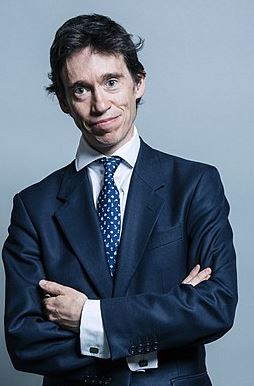
Rory StewartI’ve been following the Conservative leadership race with uncommon interest: I knew Rory Stewart quite well about 25 years ago. We were students a year apart at Balliol College, Oxford, in the mid-1990s, and though we moved in different circles and were never friends, his idiosyncratic social status as a student may provide clues about why he has been knocked out of the contest rather earlier than his supporters were hoping.
Rory Stewart was not the only Balliol graduate in the running to become Prime Minister of course: the front-runner Boris Johnson also studied at the college, several years before Stewart (or I) arrived there. But whereas Johnson trod the familiar path of the Oxford Union and the University’s Conservative Association on his long march towards elected office, Stewart shunned them both: he was in fact a member of the Labour Party (albeit an inactive one as far as I know).

Both Johnson and Stewart were also, of course, educated at Eton. A lot of nonsense has been written about Balliol in the last few weeks, mentioning it in the same breath as Eton. Although in the 1990s the majority of its students were public school, Balliol is a very different sort of place. Although Balliol has produced many senior Tories – Macmillan and Heath, as well as Boris – it was by the 1990s an almost painfully left-wing place, much prouder of its Labour products – Denis Healey and Roy Jenkins – and the journalist Christopher Hitchens, then at his irreverent peak. Although there was much snobbery at Balliol, almost all of it was of the intellectual kind, and most public schoolboys deliberately played down their social graces (one Wykehamist I knew spent most of his first year wearing a football shirt). Continue reading

Posted in Uncategorized | Tagged , , , , | 9 Comments

Don’t believe what Donald Trump says about Sweden. Immigration works well there

CIMG4139

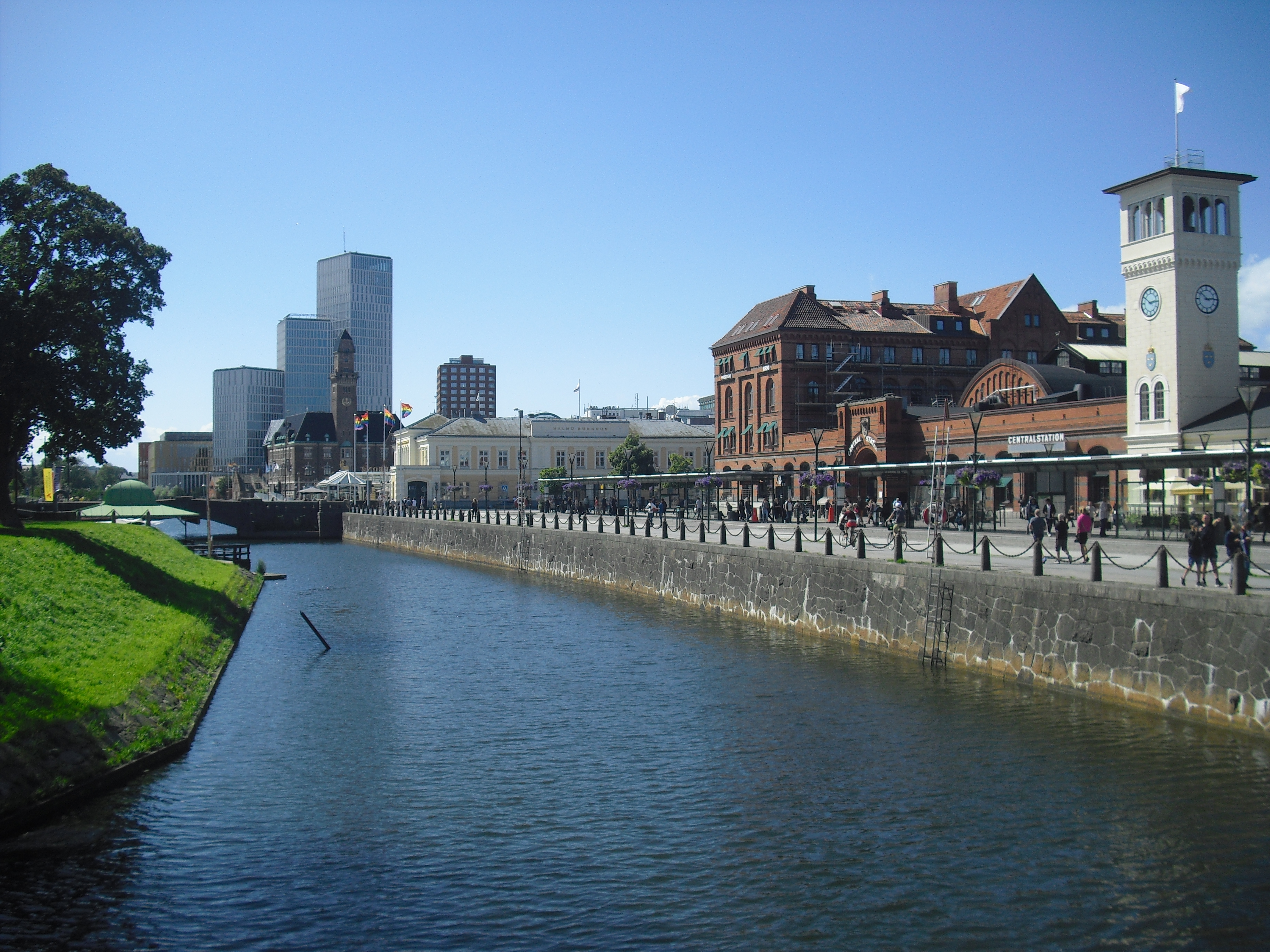
Downtown Malmö. If Nigel Farage, Donald Trump and Katie Hopkins are to be believed, this city is an interracial war zone

In the third and final part of a series of posts about modern Sweden (parts one and two can be read here and here), I look at immigration, and the crime problems that many neo-cons claim it has caused. The reality is very different. Angst about rising crime, in what remains one of the safest countries in Europe, is but one of many Swedish paradoxes.

Amidst many differences between Britain and Sweden, one area of similarity stands out: both countries are fixated on migration. The nationalistic, Eurosceptic and anti-migration Swedish Democrats show no sign of peaking as UKIP have in Britain, and are expected to make big gains in the September 2018 national and regional elections. The latest opinion polls put the Swedish Democrats’ support at almost 25%, second only to the governing Social Democrats and ahead of the traditional centre-right Moderate Party. A few polls have even put them in first place, ahead of the Social Democrats.

A decade ago this would have been unthinkable. The Swedish Democrats were founded in 1988 but spent more than 20 years in the far-right wilderness, not winning any seats in the Riksdag – the Swedish parliament – until 2010.  Continue reading

Posted in Uncategorized | Tagged , , , , , , , | 2 Comments

Sweden, a land where consumer has never been king

20180606_173355

One of Sweden’s many pleasant surprises is the beauty of its Baltic coast, whose sandy beaches can look Mediterranean – even tropical – on a sunny summer’s day

In the second part of a three-part series of posts about modern Sweden (the first part can be read here), I look at Sweden’s weather, its inhabitants’ supposed shyness, and how Swedish consumers fare when it comes to buying alcohol and food

When I first visited Sweden a year ago the weather was truly awful (the summer of 2017 was the coolest in Sweden since the 1860s, by one definition, and it felt like the wettest as well). Back in the late 1960s the American writer Susan Sontag grumbled that Sweden’s short summers, during which Swedes lift their faces towards every brief outbreak of sunshine, “have their own pathos.” And its hard to disagree: by the end of July, the best weather had passed, and by the time the sun did come out in late September, it was accompanied by an icy wind. The Swedes’ fixation with midsommar – marked by lots of Akavit, herrings, and maypoles – seemed to be a paradox that depended on their summers’ brevity, not their length or warmth. 

But no-one comes here expecting Mediterranean sunshine so a visitor can hardly complain. And I’m assured that on average the climate’s only a degree or two cooler than my home county of Northamptonshire, even though Northants is 300 miles further south (the southernmost part of Sweden is at the same latitude as central Scotland). Thanks to the gulf stream southern Sweden is in the same biome – ‘nemoral’ according to the Walter classification system – as most of England: broadleaf woodlands, unpredictable summers but mild winters with short frosts. Trelleborg, a ferry port just south of Malmö and the southernmost point of mainland Sweden, even has palm trees.

And in late April, after eight months of heavy rain and intermittent snowfall, the best summer weather I’ve ever experienced anywhere in northern Europe arrived, and has stayed for three golden months. It’s at times like this that you appreciate that even the tiniest village has a spotlessly-clean public bathing place on its nearest lake. Continue reading

Posted in Uncategorized | Tagged , , , , | 3 Comments

Sweden: how a ‘dull country’ is still worth living in

CIMG4241

Almost every Swedish village has a public beach like this on its local lake

In the first of a three-part series about modern Sweden, I look at what twentieth and twenty-first century writers have to say, and how the reality of life in Sweden compares to the euphoria or opprobrium that it often provokes.

“I always thought Sweden sounded a dull country, much more so than Norway or Finland,” George Orwell once wrote to his friend Michael Meyer, a lecturer at the university of Uppsala. “I should think there would probably be very good fishing, if you can whack up any interest in that. But I have never been able to like these model countries with everything up-to-date and hygienic and an enormous suicide rate.”

“I came prepared to see through the familiar negative clichés about Sweden – and found many of them disconcertingly confirmed,” wrote Susan Sontag in the late 1960s. “To repress anger as extensively as people do here greatly exceeds the demands of justice and rational self-control; I find it little short of pathological.”

One of the great hatchet jobs of modern American letters, Sontag’s 16-page Letter from Sweden, published in the July 1969 issue of Ramparts magazine, spared few sections of Swedish society. Swedes were obsessively obedient of petty rules: “Old ladies glare at you when you cross an empty street against the light”. But when things go wrong “hardly anyone gets fired”: Sontag saw Swedes as so pathologically frightened of conflict that they turn a blind eye to incompetence and failure. Southern European immigrants told Sontag they found Swedes “unbearably cold, stiff and priggish”, and Sontag agreed.

Superficially, Sontag considered Sweden to be much like the US or West Germany – “six-lane highways, suburban shopping centres… refined and partly detoxified by the condition of advanced ‘welfare state enlightenment’”. But on closer examination she found Sweden full of meanness and pedantry. Swedes split restaurant and taxi bills to the last cent, were notoriously shifty about planning social engagements, and – worst of all – continually smoked Sontag’s cigarettes without returning the favour.

Continue reading

Posted in Uncategorized | Tagged , , , , , , | 3 Comments

A word of advice to the National Trust’s new Director-General: urbanise

CIMG9421

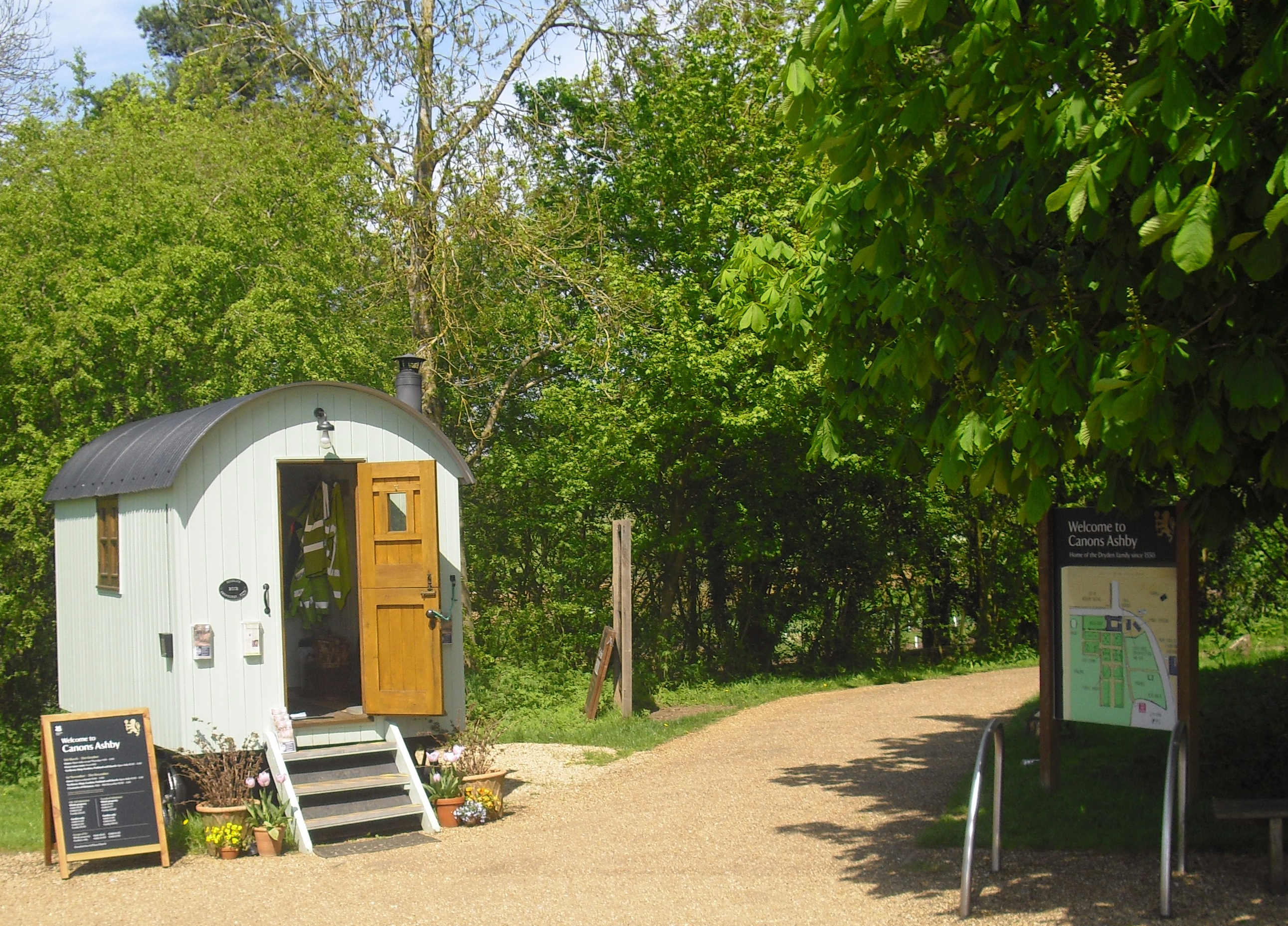
The shepherd’s hut at the entrance to Canons Ashby: all at once the National Trust is smug, patronising, and unbearably twee

It’s been an eventful six years for the National Trust’s Director-General Helen Ghosh, who’s announced she’ll be stepping down in April 2018. She’s been constantly bombarded with criticism from right-wing newspapers ever since her appointment  in 2012.  When she suggested that the Trust might soften its opposition to windfarms, the Daily Telegraph said she threatened to turn the Trust into a “Leftie pressure group”. When she said – incontrovertibly – in 2015 that there was a “perception” that the Trust was too middle class, she was accused of patronising supporters.

When she pointed out – correctly – that the NT had started life as a protector of open spaces as well as just buildings, and announced that the Trust would focus more on acquiring land, not stately homes, she was condemned as a politically-correct busybody (even though the Trust’s open spaces attract ten times more visitors than its houses). Other charges include spoiling country views with garish signage, scraping the barrel by buying up Agatha Christies’ former holiday home, ruining the interior of Ickworth House in Suffolk by taking out pieces of historic furniture and replacing them with brown leather beanbags, and intrusively asking volunteers to divulge their sexuality.

The Trust’s critics have even argued that the recent fire that devastated one of the Trust’s foremost eighteenth century mansions, Clandon Park in Surrey, was somehow the result of Ghosh’s lack of interest. “Is the National Trust to blame?” asked a nudge-nudge headline in the Daily Mail. Its reporter had tracked down Teresa Onslow, Auberon Waugh’s widow, who’d grown up in the house and now urged others not to hand over their stately homes to such a negligent custodian.

Then there were the Easter Eggs: last April the Trust was (falsely) accused of airbrushing the word ‘Easter’ from its annual chocolate hunt, prompting Theresa May to condemn the Trust as “absolutely ridiculous” (Kremlinologists pointed out that Ghosh – a former permanent secretary at the Home Office – is said not to have got along well with May when she was Home Secretary). And then this summer saw the rainbow lanyard saga. As part of a ‘Prejudice and Pride’ campaign – “political claptrap”, wrote Harry Mount in the Mail the Trust had ordered staff and volunteers at Felbrigg Hall in Norfolk to wear Gay Pride lanyards or else “step back”, only to then perform a sudden U-turn and announce that the lanyards were voluntary. The Trust “has been hijacked by a lethal combination of catastrophic dumbing-down, social engineering, rampant politicisation and intolerance of opposing views,” fumed Mount. Continue reading

Posted in Uncategorized | Tagged , , , , , , , | 3 Comments