
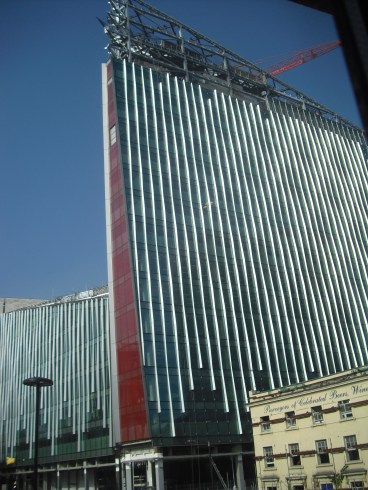
 Building Design magazine’s awarding of its Carbuncle Cup for this year’s worst new building to Nova, a new office and retail development around the corner from London’s Victoria Station, sets off predictable reactions. How could it have been built? Who in their right mind would give it planning permission? And why didn’t someone do something to stop it?
I have some experience of the Carbuncle Cup: in 2014 it was given to the Woolwich Central development (a huge Tesco’s with flats on top, considerably dumbed-down by cost-cutting on the way from drawing board to completion), whose planning permission was granted by a Greenwich planning committee I had chaired ten years ago. But Woolwich was – and arguably still is – an obscure corner of south-east London, while Nova is at the very heart of London. What is this development – which unless you live or work in Victoria, few would have heard of until now – and how did it come about?
Rather than the Nova development as a whole, the Cup’s only been awarded to Nova North and Nova South, two 16-storey office blocks by PLP Architecture described by judges as “a hideous mess”, a “crass assault on all your senses”, and a “demented preening cockerel”. A residential building to the west, by Benson & Forsyth (architects of the Museum of Scotland in Edinburgh), and to the east Lynch Architects’ L-shaped block containing a new public library, are rather better. But they’re not enough to redeem the rest. The whole of this huge 2.5-hectare development – bordered by Bressenden Place, Buckingham Palace Road and Victoria Street – is a shambles.
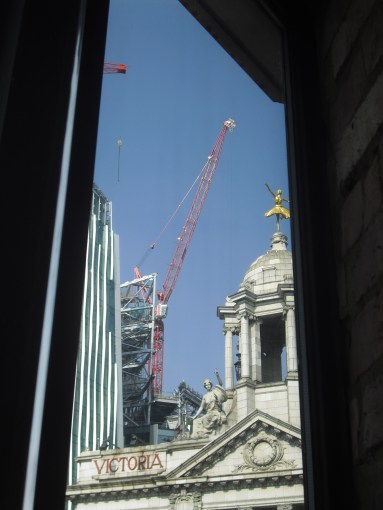
Nova’s construction cranes above the Palace Theatre, 2016
On paper it’s great of course. Its marketing material says Nova is “a game changing 897,000 square feet mixed use scheme delivering 603,000 square feet of world class Grade A offices, 193,000 square feet of contemporary high quality apartments, 85,000 square feet of inventive and inspirational restaurants, eateries, bars, and retail”.
The developers once crowed that they would create a “covetable workspace for innovative global businesses, a destination for exciting, concept shopping, and a distinctive, ever-changing cultural space”. Nova is “More than a development… [it’s] a campus, a village, a district, a quarter, a landmark, a place to live, work and enjoy. Because it’s completely new. It’s Nova”. Some people, the blurb added, “think all the large scale, redefining, landmark developments in central London have already been done. We think differently… Nova is an architecturally daring development on a grand scale, creating a vibrant new link between Victoria Station and Buckingham Palace and the Royal Parks, and definitively crowning the recent reinvention of Victoria.”
Sadly no one at Westminster Council had their bullshit detectors on when this guff was written. Why not? Victoria is often seen merely as a transport interchange, through which passengers pass as quickly as they can, or at best a transitional area between Belgravia, St James’, Pimlico and Westminster. Continue reading
 There are few pleasures like exploring an unfamiliar town on foot for the first time. A new series of posts on this website, In Praise of Ordinary Places, looks at Middle England towns that are overlooked by tourists (Oxford, Bath and Stratford-upon-Avon need not apply). This is the antidote to Crap Towns. I’ll speak as I find and won’t overlook ugliness, tackiness and misery. But I’ll also celebrate authenticity, unexpected surprises, and the ordinariness of places that rarely feature in Best Places to Live contests. Having started with Bedford and Northampton I now turn to a cathedral city to the east: Peterborough.
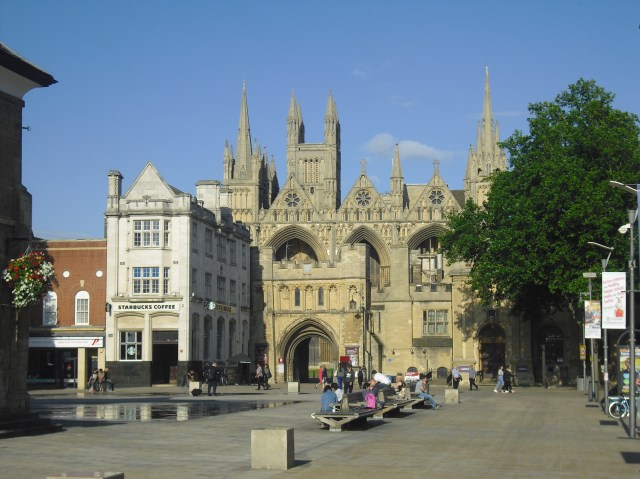 Don’t be put off by the industrial estates and roundabouts that girdle the place: Peterborough is, at heart, an ancient cathedral city, albeit much expanded since it was designated as a New Town in the 1960s.
  There are few pleasures like exploring an unfamiliar town on foot for the first time. A new series of posts on this website, In Praise of Ordinary Places, looks at Middle England towns that are overlooked by tourists (Oxford, Bath and Stratford-upon-Avon need not apply). This is the antidote to Crap Towns. I’ll speak as I find and won’t overlook ugliness, tackiness and misery. But I’ll also celebrate authenticity, unexpected surprises, and the ordinariness of places that rarely feature in Best Places to Live contests. I started with Bedford and my second outing is to another county town 20 miles away: Northampton.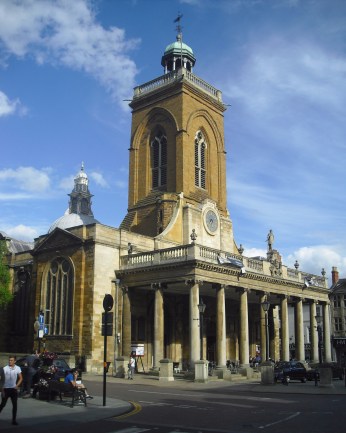
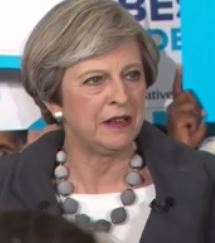 A screeching U-turn on long-term care bills. Uninspiring, robotic TV appearances – and several non-appearances at leadership debates and Today programme interviews. An inability to think on her feet, answer unscripted questions from the public, show herself as a team player, or display a smidgeon of humour, courage, imagination or even humanity.
 There are few pleasures like exploring an unfamiliar town on foot for the first time. A new series of posts on this website, In Praise of Ordinary Places, will look at Middle England towns that are overlooked by tourists (Oxford, Bath and Stratford-upon-Avon need not apply). This is the antidote to Crap Towns. I’ll speak as I find and won’t overlook ugliness, tackiness and misery. But I’ll also celebrate authenticity, unexpected surprises, and the ordinariness of places that rarely feature in Best Places to Live contests. First up: Bedford.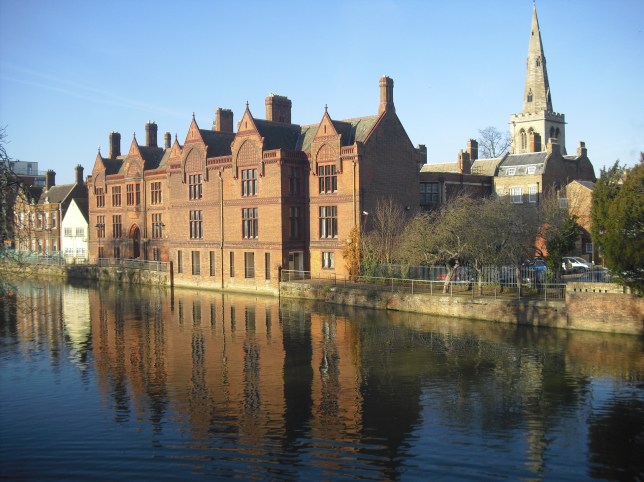

 Cuba is one of the few policy areas where Trump could go either way. Donald Trump’s ghoulish tweet announcing “Fidel Castro is dead!” just a few hours after the Cuba leader had died last November might indicate that his attitude to Cuba will be like his attitude to just about everything else: insensitive, narcissistic and goading. But in fact, the ongoing thaw in US-Cuba relations is one Obama initiative that Trump may support.
 The river Nene – the slowest-flowing river in England, and its tenth-longest – meanders through Northamptonshire past water meadows and dozens of former gravel pits, long ago flooded and now a nationally important habitat for wetland birds. Northamptonshire’s an underrated county, the Nene is its under-rated river, and one of its most verdant stretches is between Irthlingborough and Wellingborough.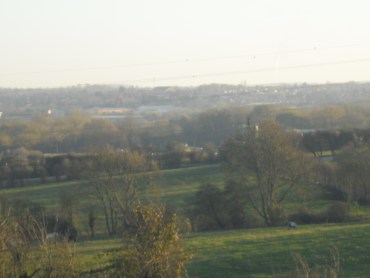
 Constituency boundary changes don’t just matter to map anoraks or political obsessives (I’m a bit of both). And the proposals won’t just mean a cull of MPs: they will reshape our politics by disenfranchising millions of voters. With no suggestion of proportional representation for the House of Commons, or a democratically-elected Lords, the new boundaries will make our electoral system even less fair. And just when Theresa May’s government needs a strong opposition, the changes will further distract and divide Labour, pitting many of its embattled MPs against each other.


 Alex Grant