Constituency boundary changes don’t just matter to map anoraks or political obsessives (I’m a bit of both). And the proposals won’t just mean a cull of MPs: they will reshape our politics by disenfranchising millions of voters. With no suggestion of proportional representation for the House of Commons, or a democratically-elected Lords, the new boundaries will make our electoral system even less fair. And just when Theresa May’s government needs a strong opposition, the changes will further distract and divide Labour, pitting many of its embattled MPs against each other.
I’m a lifelong Labour man and it’s no secret that the changes will almost certainly hit Labour hardest. But there are many reasons why reducing the number of MPs by 8% is bad news for everyone, regardless of political allegiance. Here are five problems with the proposals – and one silver lining, though you have to look very far ahead through the clouds to spot it.
1 It’s a myth that Britain has too many MPs
It’s often claimed that Britain has too many legislators per head of population. But there aren’t too many politicians in Britain. If anything there are too few. Continue reading
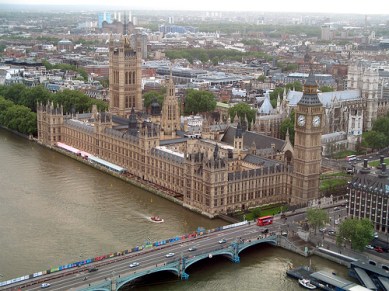 News that the Palace of Westminster will be out of bounds for six years for the £4bn mother of all restorations
 One Saturday morning a few weeks before the referendum there were two Vote Leave stalls on the streets of Thrapston, the Northamptonshire market town a few miles from my home. I was in a hurry, buying eggs and vegetables at the market, and in no mood for a political discussion when I was approached by a friendly-looking, 60-something man in a red Vote Leave T-shirt. I had to think on my feet to politely decline the leaflet he offered. “No thanks, I’m a Labour voter,” I told him foolishly. “So am I,” he replied.
 The spectacular collapse of Boris Johnson’s Prime Ministerial hopes earlier today have a striking historical parallel. Boris is not – and never has been – the Donald Trump or Winston Churchill of contemporary British politics, or even the Falstaff or Dennis the Menace. Johnson’s career, and its apparent demise, now bear an uncanny resemblance to a half-forgotten giant of Conservative politics: Quintin Hogg, Viscount Hailsham (1907-2001).
 or two months in the run-up to Christmas 2015 I worked the night shift at a Royal Mail sorting office in Peterborough. Media commentators are often quick to appoint themselves as experts on the labour market, but most have never stepped inside – let alone been employed in – places where Brits work alongside Eastern European migrants. I have, and the experience made me even more determined to vote Remain in the EU referendum today.