Memo to the Left: 1 Nationalism should always be viewed with suspicion. 2 Press freedom needs to be fought for. 3 And an independence referendum is not a conference workshop

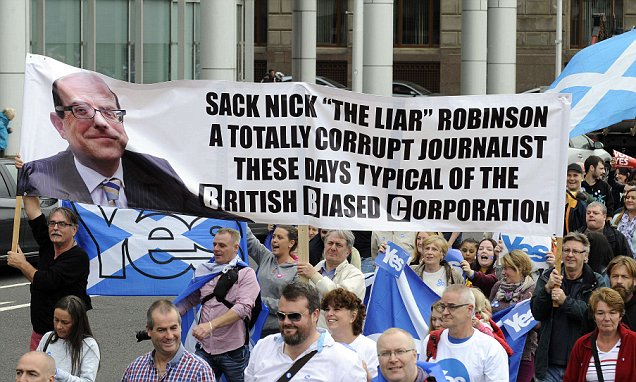
Pro-independence A political leader who has spent much time cosying up to Rupert Murdoch faces difficult questions from a broadcast journalist, a few days before a crucial electoral test. The leader accuses the journalist of “heckling” him. The press conference has been infiltrated by supporters who applaud their leader loudly, and drown out the journalist’s questions with heckles of their own. The leader accuses the journalist of bias – without citing evidence – and says he expects the broadcaster to “co-operate” with a leak enquiry and reveal its sources. The leader then organises a mob of supporters to surround that broadcaster’s offices, carrying banners accusing the journalist of being a corrupt liar and demanding that he be fired.

Tony Blair’s New Labour going for the BBC after they accused Number Ten of sexing up the dossier about Weapons of Mass Destruction? Vladimir Putin? No: this was Alex Salmond clashing with Nick Robinson, the BBC’s political editor, when he asked about the future of RBS if Scotland votes yes to independence on Thursday. Salmond’s bullying raises a dangerous precedent, and is a sobering warning of how media freedom might fare in an independent Scotland. I hold little affection for Alistair Campbell, but even he stopped short of sending a mob from Labour HQ to Broadcasting House to demand that BBC journalists lose their jobs.

Why aren’t the left queuing up to express outrage about a politician making such threats to a public service broadcaster? It should be the role of the intelligent left to call time on such humbug. But too many have sat on the fence or fallen for the “Yes” campaign hook, line and sinker. Never has the absence of Robin Cook and Donald Dewar – two Labour politicians who would be able to demolish Alex Salmond with withering scorn – been felt so keenly. Continue reading
Posted in Uncategorized | Tagged , , , , , , , , | 1 Comment

Will Len McCluskey ever shut up? Bashing the Lib Dems won’t win the election for Labour

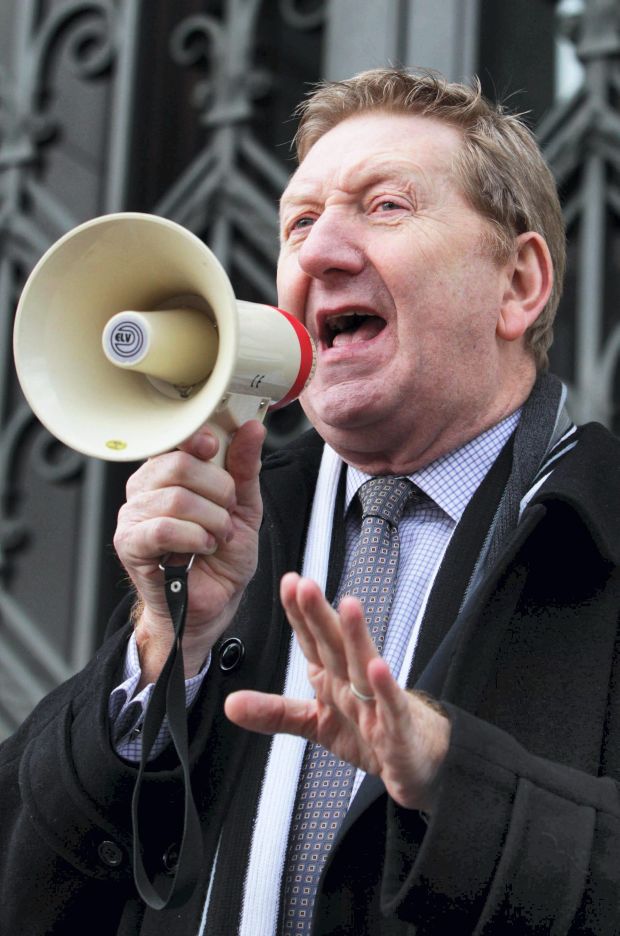
Len McCluskeyWill Len McCluskey ever shut up? His call for Labour to rule out a coalition with the Lib Dems after the 2015 election (as reported in last Sunday’s Observer), or else face cuts in funding from the Unite union he leads, is as unhelpful an intervention as it gets. It fuels the myth that Labour is controlled by union barons and makes another term of Tory-led Government beyond 2015 more, not less, likely.

The only good news is that the ongoing turmoil of the Scottish referendum campaign meant that the TUC congress, and the crass stupidity of Len McCluskey’s comments, did not get as much media coverage as they would have normally got. I hope Ed Miliband, and the TUC, ignore him.

I agree that the Lib Dems have committed many errors, and betrayals, in office – but they had little choice but to join the Tories in a coalition in 2010. A rainbow coalition of Labour, the Lib Dems, SDLP, Green, Scots and Welsh Nationalists  was never on the cards, whatever Andrew Adonis may say. Even if it had been cobbled together it would not have survived long: given the increasingly venomous Scottish referendum campaign, can you imagine a coalition of the Lib Dems, Labour and Alex Salmond’s SNP still in office today? And imagine the opprobrium that would have been poured on the Lib Dems for having teamed up with a defeated Labour party that had only gained a pitiful 29% of the popular vote. Continue reading

Posted in Uncategorized | Tagged , , , , , , , | Leave a comment

Carbuncle Cup: the end of localism?

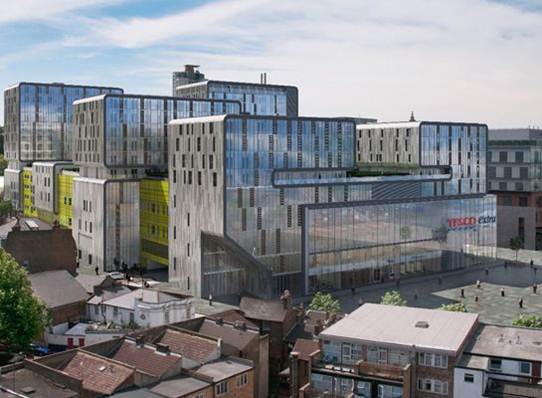
004It’s been a busy few days for me. Since last Wednesday, when Woolwich Central was announced as the winner of Building Design’s Carbuncle Cup, I’ve been inundated with emails, tweets and requests for comment: I chaired the Greenwich Council Planning Board meeting in January 2007 at which the notorious building was approved. If you have missed the controversy I won’t repeat what I think of the building and why it got planning permission: you can read the piece I wrote back in June (when the development was first shortlisted for the Cup), a piece I wrote for the Guardian Comment is Free on September 3rd (Woolwich Central: my regrettable part in its rise) and for Building Design on September 4th (Just how did Woolwich Central get planning? (by the man who gave it) -subscription required).

Media verdicts on the award have fallen into two categories. The first is that big, bad Tesco forced the council to give planning permission against its will. This is nonsense: Greenwich council gave planning permission quite willingly and needed no persuasion that a large supermarket was the answer to Woolwich’s problems.

The second is an anti-localist judgement: if only the decision on the planning application had been taken out of the hand of  incompetent idiots like me, higher powers would have intervened and turned the application down. Again, this is nonsense. It’s tempting to blame Greenwich Council, and the committee of councillors that I chaired, for this sorry state of affairs. But as I explained back in June, the granting of planning consent to Woolwich Central did not take place in a vacuum. Government policy strongly favoured (and still does) putting high-density residential developments, and large supermarkets, in town centres with good public transport links. Sheppard Robson are a good firm and the development was overseen by a high-calibre design panel chaired by Paul Finch (then chair of CABE and a former editor of all three of the UK’s top architectural magazines: Building Design, The Architects’ Journal and The Architectural Review) and including Tobias Goevert of Design for London, Paolo Testolini of BDP and Mark Fitch, a transport planner at Colin Buchanan and Partners: all people who know what they are talking about.  Continue reading

Posted in Uncategorized | Tagged , , , , , , , , , | 7 Comments

Parade’s End: how First World War architecture fell out of fashion

This slideshow requires JavaScript.

With the centenary of the outbreak of the First World War upon us, it’s been impossible to escape. Siegfried Sassoon poems have been reverently recited on Newsnight. On Woolwich Common, near where I live, a replica trench has been built for schoolchildren to visit.

It’s understandable that though the last veteran died several years ago, this centenary should be marked so reverently. The two world wars of the twentieth century were without precedent and the start of the first marked a decisive break in world history. For the first time industrialised warfare meant that a major conflict would end not with a quick and decisive victory but a bloody stalemate that took four years – and millions of casualties on all sides – to conclude. Of course there weren’t the same commemorations in the 1950s on the centenary of the end of the Crimean War. While that cost  20,000 British lives, a large number for a conflict that did not impinge directly on British interests and took place many thousands of miles from home, this was a tiny fraction of the million British deaths during World War One.

That the First World War was soon described afterwards as the “War to end all Wars” adds greater poignancy. The Second World War, which started barely twenty years after the First ended, saw 60 million killed – four times as many as the First. With conflicts taking place all over the world – in Ukraine,  southern Sudan, Libya, Syria, Palestine and an under-reported but very bloody Mexican Drug war, which has claimed an astonishing 150,000 lives since 2006 – it’s appropriate and right to reflect on the ongoing folly of war, and how poorly mankind has learnt the lessons of past conflagrations.

But amidst the military re-enactments, the renditions of the Last Post and the constant repetition of poems by Sassoon, Wilfred Owen and Rupert Brooke, something is missing. The architectural styles that flourished both before, during and after the war – Edwardian Baroque and its successor, the souped-up neo-Georgian architecture of the reign of George V from 1910 onwards – have quietly fallen out of fashion just as the First World War’s centenary has approached. Continue reading

Posted in Uncategorized | Tagged , , , | 1 Comment

We should applaud Michael Gove’s departure – and understand why he lasted so long

Twenty years ago, as a student, I spent a couple of weeks doing work experience at the Times and met Michael Gove, then an up-and-coming Leader writer. I was – and arguably still am – a complete nobody and Gove was already somebody.  But he could not have been  kinder to me during the half hour we spent together, asking what my interests were and why I wanted to start a career in journalism –  a very good question which he asked without a hint of menace. I forgave him for having written a fawning biography of Michael Portillo, a politician I loathed, and who Gove predicted would succeed John Major as Conservative leader after electoral defeat in 1997 (a sound prediction that could well have come to pass had Portillo not lost his Enfield Southgate seat).

Michael Gove and I had a frank discussion about the manifold problems the Tories faced in the mid-1990s, and the risks that were latent in the forthcoming Labour landslide. Gove was charming, funny and modest, and he seemed genuinely interested in the half-formed political thoughts I shared with him. On my bookshelf I still have the hardback Portillo biography (with a True Blue dust jacket and subtitled ‘The Future of the Right’) that Gove gave me that day, unread but not forgotten. The children’s author Anthony Horowitz recently interviewed Gove for the Spectator and  began to wonder if he was “a monster” in sheep’s clothing.  But my own encounter with Gove as a twenty-year-old left me with an enduring liking for the guy – one that, as a Labour man, I have not widely advertised.

Who was the most successful politician in the current Cabinet until yesterday? Probably Michael Gove. Like him or loathe him, he managed to take on the teaching unions and win, by taking the rug away from their feet through the exponential growth of Free Schools and Academies. Despite his many failures and mistakes – cutting school sports funding in the run-up to the Olympics,  botched GCSE reform, his ill-judged assertion that schools were teaching World War One history in an “unpatriotic” way, his disparagement of the education establishment as the “Blob” – he refashioned New Labour’s Academies and made them seem like his idea in the first place. And he cleverly stole Labour’s clothes by portraying Free Schools as beacons of opportunity and vehicles for social mobility, not the “Vanity project for yummy Mummies” that his shadow Tristram Hunt once described them as. Continue reading

Posted in Uncategorized | Tagged , , , , | 4 Comments

Beware the dangers of Opportunistic Labour

It's tempting for Labour to make as much politcial capital as possible out of phone hacking at the News of the World: but Labour is almost as vulnerable on the issue as the Tories are
It’s tempting for Labour to make as much politcial capital as possible out of phone hacking at the News of the World: but Labour is almost as vulnerable on the issue as the Tories are

The conviction of Andy Coulson last week left an open goal for Labour. I choose my words carefully, given that Coulson is about to face a retrial on further charges, but Labour was – and still is – quite right to question the judgement of David Cameron for hiring Coulson as his communications director.

Seven years after the scandal first broke it’s easy to forget that Coulson was hired in May 2007, just four months after he had resigned as editor of the News of the World following the conviction of its royal editor Clive Goodman and private investigator Glenn Mulcaire for phone hacking. Even in 2007 the “rogue reporter” defence was wearing thin. As a father (and a former journalist) I am as sickened as anyone that any reporter should hack into the mobile phone of a murdered teenage girl, and that any editor condoned or encouraged the practice.

But shooting at an open goal should not invite charges of time-wasting or unsporting behaviour. Labour should let the conviction speak for itself, and move on.

It was a mistake for Ed Miliband to ask so many questions at PMQs on June 25th about the security vetting that Andy Coulson had or had not received: as the Guardian‘s John Crace has argued, if there was an open goal, Miliband missed it. Although no Labour spin,doctor was ever convicted of any crime, its record on spin and toadying to Murdoch make Labour vulnerable on the issue, and Cameron saw Miliband’s questions coming from a mile off.

Continue reading
Posted in Uncategorized | Tagged , , , , , | 1 Comment

And who is to blame for this carbuncle? Er, me actually…

SEPTEMBER 3rd UPDATE: The Woolwich Central development, which this blog post of June 25th covered, has now been declared the winner of Building Design’s 2014 Carbuncle Cup, as covered by the Guardian, the BBC’s One Show (3 minutes thirty seconds in), Radio Four’s Today Programme (3 hours, 43 minutes in) and many other national media.

When I am chatting with friends and the conversation turns to new development in Greenwich, I freeze. Between 2006 and 2010 I was chair of Greenwich Council’s Planning Board – the committee of councillors that makes decisions on all the big applications – so if we’re talking a new building in the borough there’s a fair chance I was somehow involved in granting it planning permission.

All big developments take several years to go from drawing board to construction, and the credit crunch often made the process even longer than usual. So several schemes that were going through the planning process during my time as chair have only recently been built.

Some of them – the new Thomas Tallis School, the Sammy Ofer wing at the National Maritime Museum, the exemplary new housing development at the Royal Military Academy in Woolwich, and the new homes and a health and leisure centre being built on the old hospital site in East Greenwich – I can look at with pride.

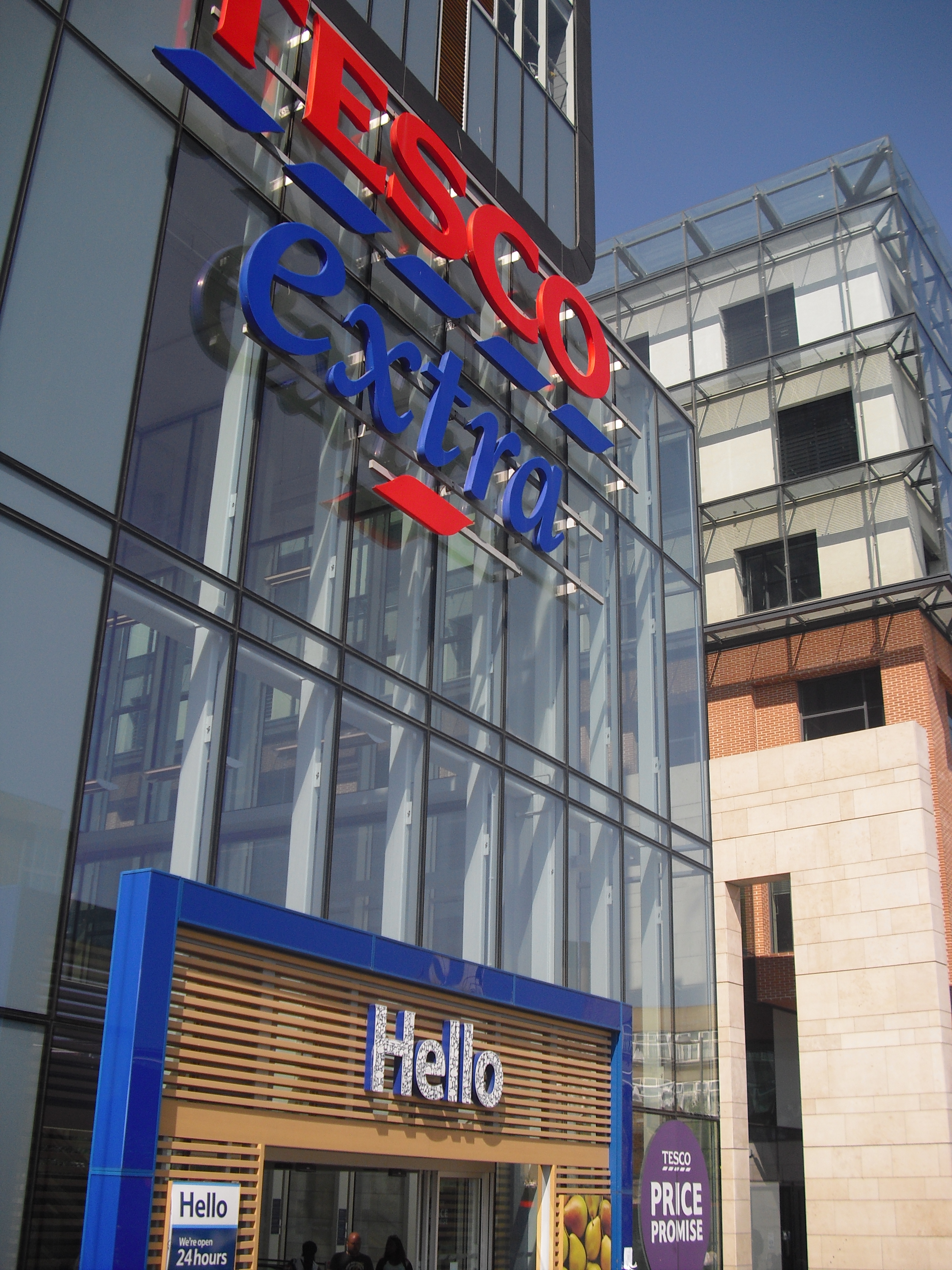
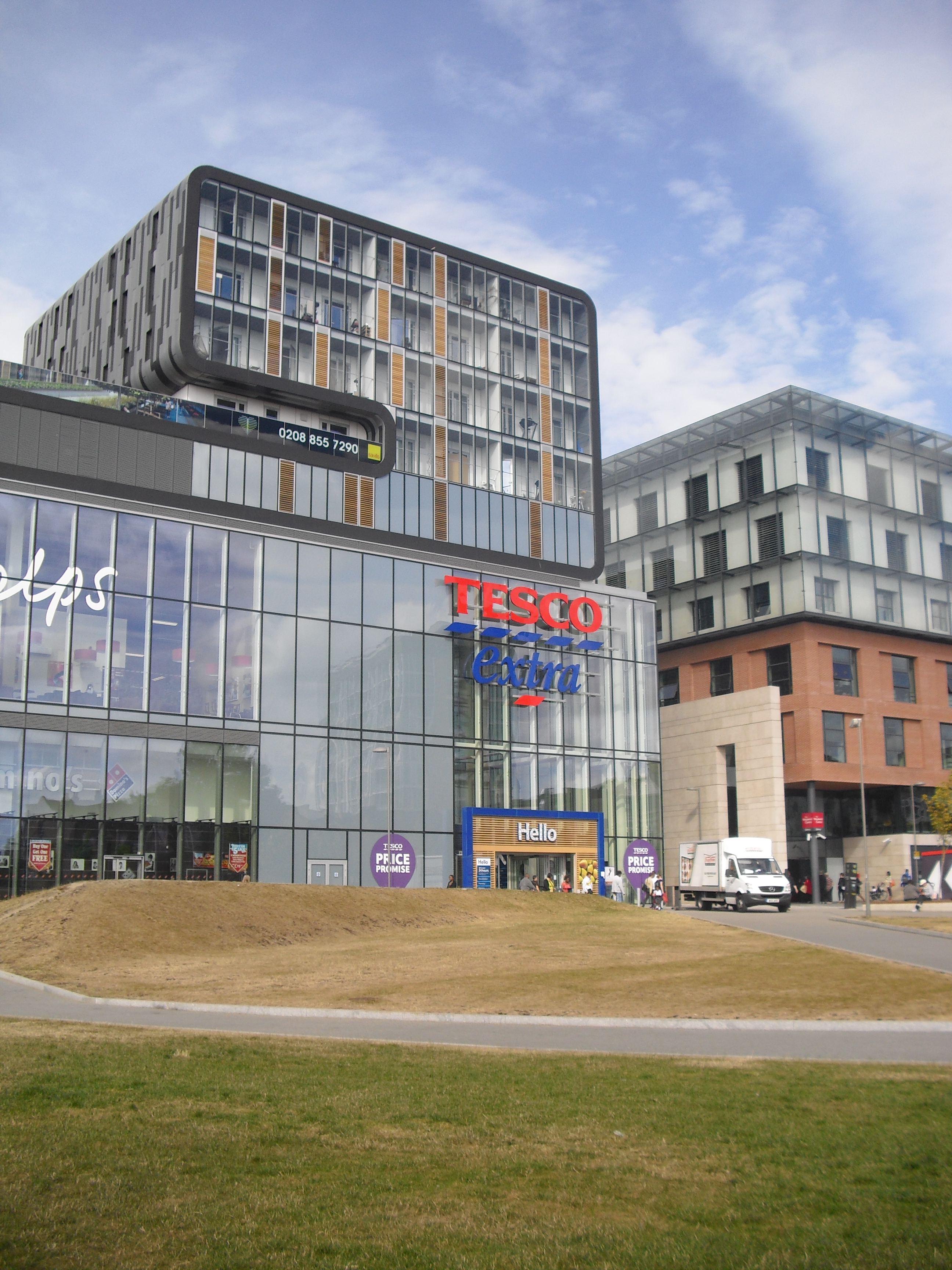
But there were a few more controversial developments, among them the Woolwich Central development of 960 homes and an 80,000 sq ft Tesco, which opened in November 2012 and which has just been nominated for Building Design magazine’s 2014 Carbuncle Cup. I chaired the Planning Board meeting at which the plans were approved in 2007.Tesco 5

This is the third time in four years that a Greenwich building  has been nominated – the restoration of the Cutty Sark, with the controversial glass box around its hull, won the Carbuncle Cup in 2012. The Woolwich Centre, a council office block adjacent to Tesco (which I will come back to later) was nominated in 2011. This probably says more about the amount of development going on in Greenwich that it does about the council’s ability to assess planning applications (in a London borough where there’s been a lot built in the last few years, a few carbuncle nominations are bound to come up).

In Greenwich the Chair of the Planning Board has some influence behind the scenes and can get plans amended before they come to the Board for a decision. In this case I can plead some mitigation: the plans were already well-evolved by the time I became chair in May 2006, and it turned out there was little scope to change them before they came to a board meeting in January 2007 for decision. But as I was intimately involved in the evolution of the Woolwich Central development over those eight months, I hope I can cast some light on how and why it got planning permission, and what lessons we can learn. Continue reading

Posted in Uncategorized | Tagged , , , , , , , , | 38 Comments

Rising to the occasion: the architecture of election counts

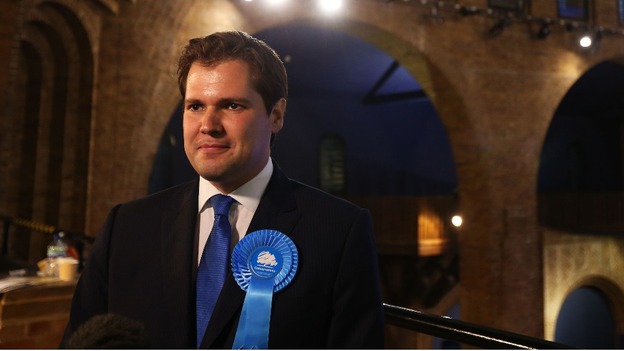
Victorious Conservative candidate Robert Jenrick at the Newark by-election count. I'm more interested in the brick arches behind him to be honest.

Victorious Conservative candidate Robert Jenrick at the Newark by-election count. I’m more interested in the brick arches behind him to be honest.

What was the most interesting thing about the Newark by-election earlier this month? Not the failure of UKIP to break through (for once I was glad a Conservative candidate won. A UKIP victory would have inflicted psychological damage on the Tories and been seized on by Labour, but it would in the long-term have been bad for politics as all parties would have to pander even more to the Euro-sceptic right).

No, what fascinated me was not the votes themselves, but the extraordinary building they were counted in: a vast, red-brick arched hall. What was that huge, dimly-lit concrete dome overhead? Were Newark’s votes being counted in Hagia Sophia, an ornate waterworks, the undercroft of a water tower, or the vaults of Westminster’s Catholic cathedral?

It turns out that Newark and Sherwood Council, in whose district the Newark constituency lies, is headquartered at Kelham Hall, the ancestral home of the Manners-Sutton family and later a theological college for an Anglican Order of Monks before the council took it over in 1973. The main Hall dates from 1859 and is designed by Sir George Gilbert Scott (of St Pancras fame) but its Byzantine, domed chapel in which the election count was held was built in 1928  by an obscure Derby architect, Charles Clayton Thompson (1873-1932). What a chapel it is: at 68 feet (21 m) high, it’s the second largest concrete dome in England and has an extraordinary flying arch. A virtual tour can be enjoyed here.

Making predictions about the next general election result from a by-election is a Byzantine process, and for once the backdrop was as Byzantine as the punditry. UKIP supporters looked like they were about to be bricked up in the chapel, their electoral mausoleum. If Newark did mark the beginning of the end of UKIP, the funereal count venue was very well chosen. Continue reading

Posted in Uncategorized | Tagged , , , , | Leave a comment

New Labour with a small ‘n’: a quiet revolution in the Town Hall

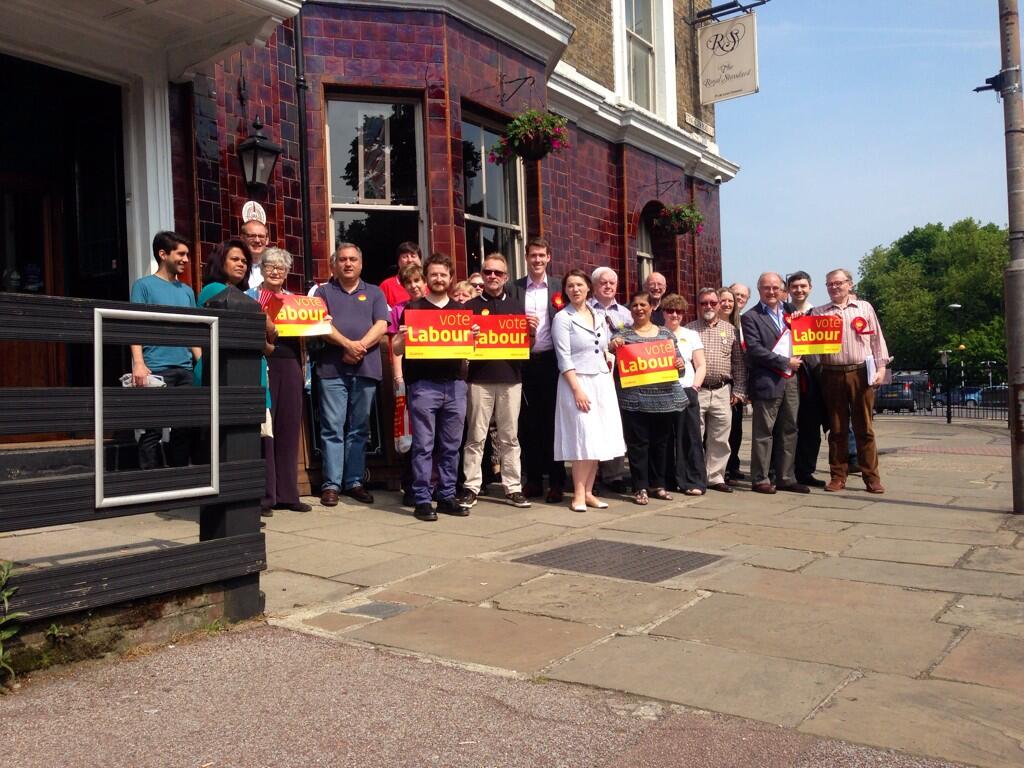
Labour out in force in the ultra-marginal Blackheath Westcombe ward in May 2014: how can this enthusiasm be harnessed to change our Town Halls for the better?

Labour out in force in the ultra-marginal Blackheath Westcombe ward in May 2014: how can this enthusiasm be harnessed to change our Town Halls for the better?

My first post on this new blog is about Greenwich – a borough in which I was a Labour councillor until May 2014 – and how a huge influx of new councillors is changing the culture of its council.

What happens in an organisation when nearly half the bosses change overnight? An unprecedented 21 new councillors in Greenwich are settling into their new jobs this month – 18 of them Labour. Of the borough’s 51 councillors, almost half either retired or lost their seats at the local elections on May 22nd and have been replaced with new ones. 

Greenwich’s council now has a new Leader Denise Hyland (its first ever woman leader, and about time too), and a new Deputy Leader, John Fahy. Of the council’s eight other cabinet members, four (Sizwe James, Chris Kirby, Danny Thorpe and Miranda Williams) have never served on the cabinet before (see the full list on the New Shopper’s website, here). And the council’s chief whip – a key behind the scenes role – is now a newly-elected councillor, Stephen Brain.

Such turnover is rare in London’s Town Halls, and rarer still in Greenwich. There was much less change at the local elections in 2002, 2006 and 2010. It’s all the more surprising that this turnover has not resulted from the Town Hall changing hands between political parties. Many of the departees had quit voluntarily and in all but three cases, their seats have been taken by councillors of the same party colours. Continue reading

Posted in Uncategorized | Tagged , , , , , | 13 Comments